
Virtual Summit Submission
Mason R. Burley
Syracuse University
Inclusive Adolescent Education & History
Biography
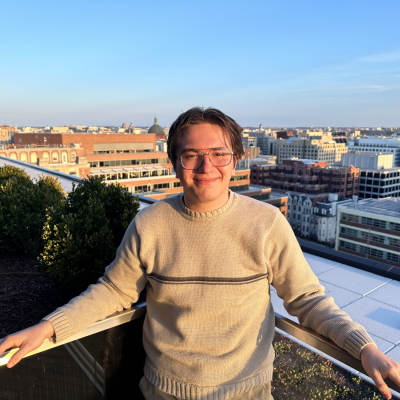
Mason Burley is a History and Inclusive Education major at Syracuse University, pursuing teacher certification in Inclusive Education. His academic work centers on atrocity and genocide education, with a focus on how post-Communist societies in Central and Eastern Europe teach, remember, or deny histories of violence. Mason has participated in the Tyler Center for Global Studies Fellowship, the Atrocity Studies Immersion Program in Washington, D.C., and international education research in Kenya. He will next study abroad and student teach in Ghana, continuing to explore education as a human right and a tool for social reconstruction.Project
"The School as a Tool of the State: How Nazi and Communist Indoctrination and State-Sponsored Violence Reengineered the Meaning of School"Through the Tyler Center for Global Studies Fellowship, I traveled to Poland, Romania, and Moldova to study how histories of atrocity and genocide are remembered and taught in post-Communist societies. My project asked how decades of totalitarian control—under both Nazi and Communist regimes—shaped collective memory and educational narratives about violence, complicity, and moral responsibility. Using a combination of archival research, interviews with educators, and site observations at museums and memorials, I examined how state-controlled education promoted national innocence while silencing uncomfortable truths about the Holocaust and political persecution. In Romania, I focused particularly on Nicolae Ceaușescu’s Pioneers Program, which used schools to instill loyalty and suppress independent thought, revealing how systems of control left lasting effects on civic learning and moral development. Across all three countries, I found that education remains central to both the persistence and the reconstruction of historical memory. This project highlights how teaching about atrocity is not only an act of remembrance but also a foundation for rebuilding empathy, justice, and democratic responsibility in societies emerging from repression.