
Virtual Summit Submission
Sofia Lara
Florida State University
Environmental Science
Biography
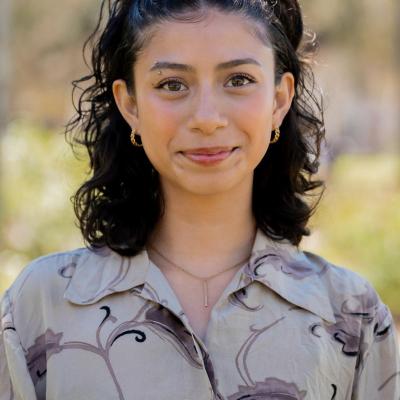
Sofia Lara is a senior from Miami, Florida, majoring in Environmental Science. She began her research career in the Rassweiler Lab with graduate student Allie Blanchette, where she studied coral cover and mortality factors using CoralNet and BORIS. She received the FSUCML Diving Scholarship and became AAUS-certified through the Academic Diving Program. Sofia conducted three weeks of SCUBA fieldwork in Bonaire, collaborating with Reef Renewal Bonaire and graduate student Marilla Lippert. Her research focused on comparing restored and wild Acropora cervicornis patches through fish and coral surveys, transects, and photographic analysis. Sofia plans to pursue graduate studies in marine science and hopes to continue using her SCUBA skills to advance marine field research.Project
Wild vs. Restored: Evaluating Ecological Function in Acropora cervicornis Reefs of BonaireAcropora cervicornis, a historically dominant Caribbean reef-builder, has declined dramatically since the 1980s and remains threatened. Restoration through outplanting—fragmenting wild corals, growing them in nurseries, and transplanting them onto reefs—has emerged as a key conservation strategy. However, the extent to which restored patches resemble wild patches ecologically remains uncertain. Bonaire provides an ideal setting to evaluate these outcomes due to its numerous established wild A. cervicornis sites and several successfully restored sites of varying ages. The goal of restoration is to improve coral cover and increase available fish habitat. We therefore ask: how long does it take restored patches to achieve coral cover comparable to wild patches, and how does increasing coral cover impact fish biomass? In addressing these questions, we aim to assess the effectiveness of coral outplanting in recovering ecological function. We surveyed 12 wild and 8 restored A. cervicornis patches, assessing fish populations, coral cover, and coral height. We found that younger restored patches had significantly lower coral cover than both older restored and wild sites, while older restored patches displayed cover patterns similar to wild patches. In addition, fish biomass increased with both restored patch age and coral cover, with older restored patches supporting fish communities comparable to those in wild patches. These findings contribute to regional and global discussions on the effectiveness of coral restoration, inform strategies for improving long-term outcomes, and highlight the potential for restored patches to regain ecological function over time.
LaraSofia_Poster.pdf2.08 MB