
Virtual Summit Submission
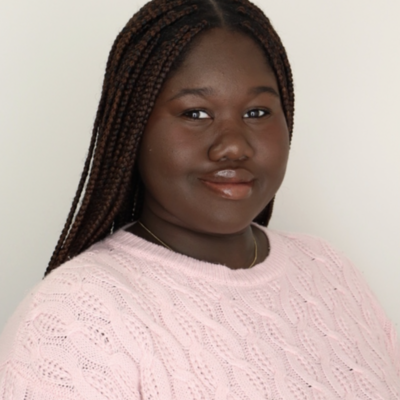
Ohemaa Asibuo
Syracuse University
International Relations and Spanish
Biography
Ohemaa Asibuo is a junior at Syracuse University pursuing a bachelor of arts in international relations and Spanish. Her academic and career interests focus on international political economy, policy, and trade, as well as Spanish-speaking societies across the Americas. During a semester abroad in Santiago, Chile, she partnered with the Museum of Memory and Human Rights to research the diverse and lesser-known victims of the Pinochet dictatorship. Her research contributes to the museum's ongoing efforts to support future exhibitions and promote commemorative education about the dictatorship in Chile.Project
The Social Diversity of Victims of the Pinochet DictatorshipPinochet’s dictatorship in Chile lasted from 1973 to 1990, but its effects extend far beyond that period. During the dictatorship, nearly 30,000 people were detained, tortured, or disappeared. While these numbers show the scale of repression, they also make it easy to overlook the real people behind the statistics and the severity of the violations they experienced. This paper focuses on individual victim cases from different social groups to better understand how widespread state violence was and to acknowledge the identities and experiences of those affected.
The victims discussed came from a wide range of occupations, political ideologies, social classes, and national backgrounds, showing that repression was not limited to one group or political position. This research uses archival sources, including press coverage, interviews, declassified documents, and victim databases, to examine how different forms of violence were carried out and justified. Looking across multiple cases makes it possible to see how this violence spread so quickly and became normalized under the dictatorship.
By examining violations against high-ranking officials, foreign nationals, DINA agents, and individuals connected to right-wing parties, this paper challenges the idea that state violence was directed only at traditional political opponents. Centering individual cases helps reduce the anonymity created by statistics and provides a clearer picture of how fear and control shaped everyday life. Ultimately, this approach emphasizes the importance of remembering victims as individuals and highlights the lasting dangers of unchecked state power.
Research paper Ohemaa.pdf254.58 KB