
Virtual Summit Submission
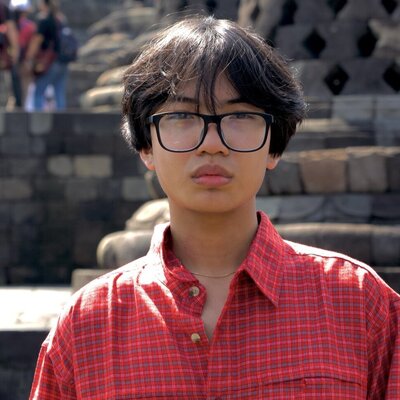
Landon Soukhanouvong
Monroe Community College
Cinema and Screen Studies
Biography
Landon Soukhanouvong is a Cinema and Screen Studies student at Monroe Community College whose creative interests center on experimental filmmaking, documentary, and visual storytelling. He is particularly interested in Asian cinema, including the Hong Kong New Wave and Taiwanese New Cinema, as well as filmmakers such as Wong Kar-wai, Hou Hsiao-hsien, Tsai Ming-liang, and Edward Yang. His work explores authentic, lived-in stories through directing, cinematography, and editing, with an emphasis on developing a distinct visual and personal voice.As a Tyler Fellow, Landon traveled to Indonesia with three fellow students to explore Indonesian folklore through individual research projects within the broader fellowship theme. His project examined the influence of Hindu and Buddhist traditions on Indonesian folklore, with a particular focus on the Javanese legend of Roro Jonggrang. The experience allowed him to grow as a filmmaker while developing his ability to connect with people, navigate unfamiliar environments, and tell stories through firsthand experience.
Outside of his studies, Landon works in photography, particularly street photography, and is passionate about traveling and documenting places and people often overlooked by conventional tourism. After college, he hopes to build an independent career as a filmmaker, working across documentaries, music videos, and commercial projects while developing his own narrative films and eventually directing a feature-length debut.
Project
Religion in Indonesian FolkloreDuring my trip to Indonesia, I explored how Hindu and Buddhist traditions continue to appear in Indonesian folklore and cultural heritage. I focused on Borobudur, a Buddhist monument, Prambanan, a Hindu temple complex, and the Javanese legend of Roro Jonggrang. My research question was how religious traditions shape folklore and how stories connected to earlier religious periods remain meaningful in a predominantly Muslim society. I approached the project through site visits, architectural and photographic observations, a brochure collected at Prambanan, informal conversations with people I met while traveling, and follow-up research into the monuments’ histories. One conversation with a young woman on a train showed me that Roro Jonggrang was familiar beyond my visit to the temple itself, although one conversation cannot represent the views of all Indonesians. I also examined the effects of colonial-era collecting and later restoration at Borobudur, which raised questions about how a damaged monument can retain its historical identity. I argue that folklore and monuments can preserve and reinterpret religious history long after a society’s religious makeup changes.
Religion in Indonesian Folklore.pdf341.52 KB