
Virtual Summit Submission
Luis Carvajal Picott
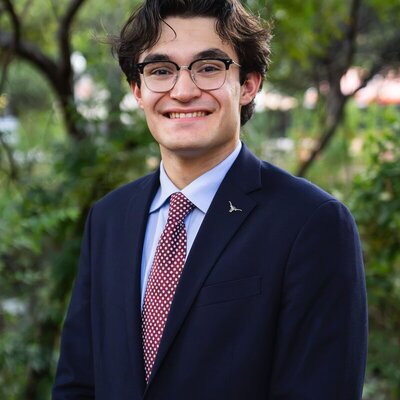
University of Texas at Austin
Major(s): International Relations & Global Studies; Government | Minor(s): National Security & International Business; Philosophy of Law
Biography
Luis Carvajal Picott majors in International Relations & Global Studies and Government at The University of Texas at Austin, with minors in National Security, International Business, and Philosophy of Law. His academic interests center on how legal and political institutions shape international development and national security. He does research with the National Geospatial-Intelligence Agency through Project Tearline, serves as a Student Government Supreme Court Justice, and directs operations for the Texas Undergraduate Law Journal. He plans to attend law school and pursue a career advancing accountable governance and international development through legal research and public policy.Project
Language, Diaspora, and Dependence: Economic Incentives and Chinese Influence in Thailand and SingaporeI traveled to Thailand and Singapore to investigate how economic relationships, Chinese-language education, diaspora communities, and media shape Chinese influence in Southeast Asia. My central question was why extensive engagement with China can coexist with concern about its political influence. I conducted open-ended interviews with officials, professors, and residents in both countries and compared their perspectives with investment data, regional surveys, government statements, and published research. My findings suggest that economic opportunities drive engagement more strongly than cultural attraction or perceptual dominance. Mandarin proficiency and ethnic Chinese business networks facilitate commercial relationships without necessarily producing political loyalty to Beijing, despite national security fears. Interviewees frequently described China as a permanent regional presence to manage, rather than an ally to embrace. Government choices also shape these relationships: Thailand has broadly welcomed Chinese investment and media partnerships, while Singapore combines close commercial ties with legal restrictions on foreign political interference. My research highlights why policymakers should distinguish economic cooperation and cultural connections from political allegiance. Understanding Chinese influence requires attention to local priorities and institutions, rather than assuming that greater Chinese visibility translates into greater public support.