
Virtual Summit Submission
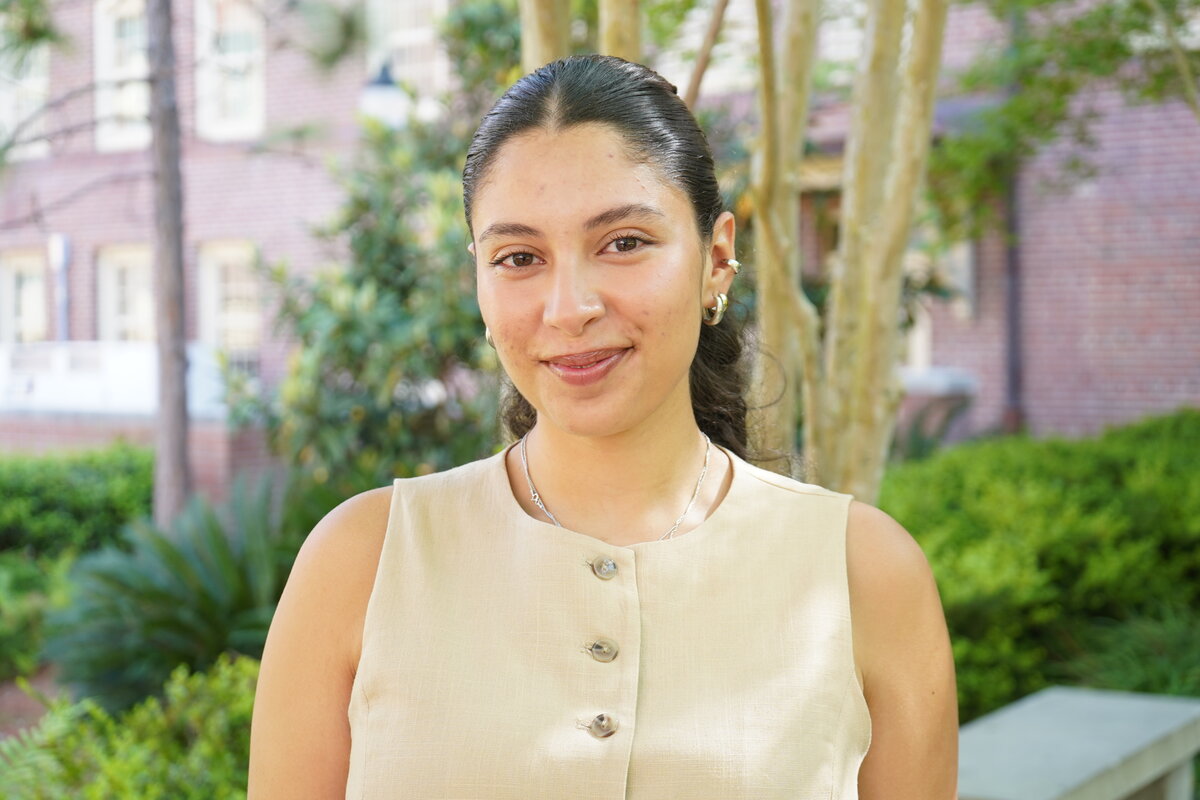
Kassandra Sevila
Florida State University
Psychology and Environmental Science
Biography
Kassandra Sevila is a third-year Environmental Science and Psychology student. She began her research career in the Rasster Lab with graduate student Laurel Field, through the UROP her first year. She studied how the intensity of coral bleaching varied among coral species and reef sites along the island of Bonaire in the Caribbean. She received the Foundational Instruction for New Scuba Scientists (FINSS) Scholarship from AAUS and completed her open water scuba certification. She then received the FSUCML Diving Scholarship and became an AAUS-certified scientific diver through the Academic Diving Program. Kassandra conducted three weeks of SCUBA fieldwork in Bonaire, assessing the abundance of juvenile corals as an indicator of a coral reef’s potential to recover from disturbance.Project
The Next Generation of Bonaire's Coral ReefsGlobal coral reef extent has declined by half since the 1950s due to stressors like warming ocean temperatures, pollution, coastal development, and fishing. Bonaire is an island in the southern Caribbean that has recently experienced declines in coral cover due to annual coral bleaching and coral disease. The abundance of juvenile corals (<4cm in diameter) on a reef is considered an indicator of the potential for a coral reef to recover from disturbance. However, abundances of juvenile corals can vary between nearby reef locations and coral genera. We assessed the density of juvenile corals at 19 sites along the west coast of Bonaire in June 2026. Our sites spanned the coastline from north to south and included urban areas. At each
site, we counted, identified, and sized juvenile corals within three 5m transects at 10m and 20m depths. We also assessed the percent cover of coral, algae, and sand at each site and depth using CoralNet. We found that sites with greater coral cover had significantly higher densities of juvenile corals. Juvenile coral density was also significantly higher at urban sites compared to northern sites, including protected sites within the national park. Coral genera with smaller, faster-growing species had significantly higher juvenile densities than larger reef-building corals. Compared to shallow transects, deeper reef areas had lower juvenile coral densities. Overall, our findings show that juvenile coral density varies across sites and depths. Future research should compare these patterns with environmental variables like water temperature and water quality to better understand the factors influencing juvenile coral abundance.
KS_IDEAPoster2026Official.pdf703.13 KB