
Virtual Summit Submission
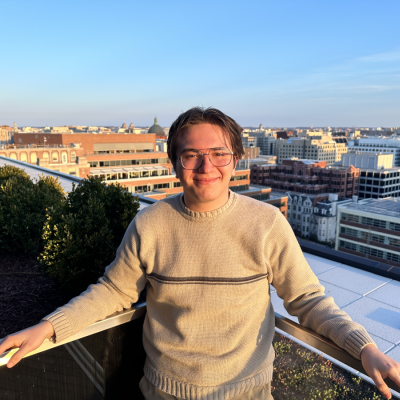
Mason R. Burley
Syracuse University
Inclusive Adolescent Education & History
Biography
Mason Burley is a History and Inclusive Adolescent Education major at Syracuse University whose work is at the crossroads between historical memory, international education and development, genocide and atrocity studies, and curriculum development. As a future educator pursuing dual certifications in Social Studies Education and Students with Disabilities, he has developed a strong interdisciplinary focus on how schools shape civic identity, historical understanding, and social belonging across diverse cultural contexts.His academic and professional experiences span both domestic and international educational settings. Mason has taught and conducted educational fieldwork in Kenya, Poland, Romania, Moldova, and Scotland examining the relationship between schooling, ideology, historical memory, and postcolonial or post-socialist societies. Through fellowships and independent research, he has explored topics including communist-era youth indoctrination, genocide and atrocity education, educational reconstruction after trauma, and the role of schools in democratic societies. His work frequently integrates archival research, oral history, documentary storytelling, and classroom practice.
At Syracuse, Mason has held numerous leadership and mentorship roles, including serving within the Student Government Association as a Board of Elections Commissioner, an academic mentor for first-year students, Residential Mentor for IncludiveU and a representative of the university in global engagement initiatives. He was selected as a 2026–2027 Remembrance Scholar and School of Education Class Marshal, distinctions recognizing both academic excellence and leadership. He is also a recipient of the Benjamin A. Gilman International Scholarship Program, supporting his continued international educational research and teaching.
Mason plans to pursue graduate study in education with long-term goals of working in teacher education, comparative international education, and higher education research. His work is driven by a commitment to inclusive teaching, critical historical inquiry, and the belief that education can serve as both a site of remembrance and a tool for social transformation.
Project
The School as a Tool of the State: How Indoctrination, State-Sponsored Violence, and Propaganda Reengineered the Meaning of SchoolThis research project examines how communist youth organizations in Socialist Romania, Communist Poland, and the Moldavian Soviet Socialist Republic (MSSR) functioned as instruments of political indoctrination, ideological normalization, and state identity formation during the Cold War era. Focusing specifically on the Romanian Organizația Pionierilor, the Polish Związek Harcerstwa Rzeczypospolitej and Ochotnicze Hufce Pracy, and the Soviet Vladimir Lenin All-Union Pioneer Organization within the MSSR, the project investigates how authoritarian states extended political education beyond the classroom and embedded ideological loyalty into the everyday lives of children and adolescents.
The study argues that these organizations were not merely extracurricular youth movements, but highly structured mechanisms designed to cultivate obedience, collectivist identity, political conformity, and emotional attachment to the state. Through rituals, uniforms, songs, labor programs, ceremonies, patriotic instruction, and participation in collective performances, youth were socialized into systems that blurred the distinction between civic participation and ideological submission. Particular attention is given to how these organizations normalized surveillance culture, state loyalty, and the integration of political ideology into childhood development.
Within Socialist Romania under Nicolae Ceaușescu, the project examines how the Organizația Pionierilor contributed to the construction of loyalty toward the Romanian socialist state and the personality cult surrounding Ceaușescu. The research explores how ritualized participation, compulsory patriotic activities, and symbolic performances transformed children into visible representations of state ideology while simultaneously reinforcing nationalism and centralized political authority.
In Communist Poland, the project comparatively analyzes the Związek Harcerstwa Rzeczypospolitej alongside the Ochotnicze Hufce Pracy to investigate the tensions between traditional Polish scouting culture, communist political restructuring, and labor-oriented socialist youth mobilization. Special emphasis is placed on how the Polish state attempted to reshape civic identity and youth participation through state-controlled organizations while existing cultural, religious, and national traditions complicated full ideological absorption.
The MSSR case study focuses heavily on processes of russophilia, russification, ritualism, and political idolatry within Soviet educational and youth culture. Through analysis of the Vladimir Lenin All-Union Pioneer Organization, the project investigates how Soviet authorities utilized youth organizations to promote Russian linguistic dominance, Soviet historical narratives, and symbolic reverence toward figures such as Joseph Stalin. The research examines how ceremonies, iconography, public rituals, portraits, songs, and commemorative practices reinforced Soviet identity while marginalizing Romanian/Moldovan cultural and linguistic identity within the republic. Particular attention is given to how ideological devotion was embedded into daily educational life through repeated ritual performance and symbolic participation.
Drawing upon archival materials, museum collections, oral histories, propaganda materials, educational documents, photographs, and field research conducted across Poland, Romania, and Moldova, this project ultimately argues that communist youth organizations fundamentally redefined the meaning of childhood, citizenship, and education. Rather than functioning solely as educational supplements, these organizations became extensions of the authoritarian state itself, shaping how young people understood identity, loyalty, history, labor, and political belonging across multiple generations.