
Virtual Summit 2025
4 submissions
| # | Starred | Locked | Notes | Created | User | IP address | Name | Photo | School | Program of study | Biography | Project Title | Project Abstract | Project File | Keywords | Approved | Operations |
|---|---|---|---|---|---|---|---|---|---|---|---|---|---|---|---|---|---|
| 22 | Star/flag Virtual Summit 2025: Submission #22 | Lock Virtual Summit 2025: Submission #22 | Add notes to Virtual Summit 2025: Submission #22 | Tue, 11/11/2025 - 12:28 PM | Anonymous | 128.62.38.24 | Laasya Khandavalli |
|
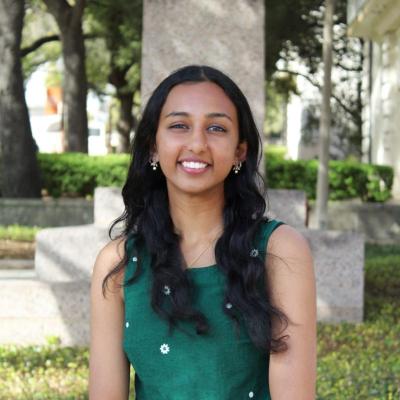
University of Texas at Austin | Environmental Science | Laasya Khandavalli is an undergraduate senior at UT Austin pursuing a B.S. in Environmental Science (Geography) and a Bridging Disciplines Certificate in Human Rights and Social Justice. She is a Rapaport Scholar and Tyler Fellow and has accumulated various internships and research experience over her undergraduate career. Her interests center around natural disaster preparedness and emergency management with a focus on evaluating and mitigating socioeconomic disaster impacts on vulnerable populations. She is passionate about bringing context-based approaches to community service and engagement. | Evaluating the Effect of Extreme Heat on Small Businesses in Ahmedabad | Global climate projections show increasing average and maximum temperatures, disproportionately affecting vulnerable populations. This study examined how extreme urban heat affects health, business survival, productivity, and stress among a variety of small business owners in an effort to identify key factors affecting small businesses due to increasing temperatures in Ahmedabad. Climate adaptation strategies, such as natural roof insulation, whitewashes, and portable shade mechanisms, were discussed and evaluated for their efficacy and popularity. Wet bulb temperature thresholds were identified and used to help understand the experiences of small business owners and their families. We found that around 40% of respondents reported delays, spoilage, or loss of perishable food items due to heat-related disruptions in transportation, storage, or supply delivery during the 2025 extreme heat period. More than 80% of respondents experienced a decline in their customer base and subsequent sales solely due to extreme heat in 2025. Additionally, 85% of respondents reported reducing the number of meals they or their family ate per day due to the 2025 extreme heat. Based on these findings, we can infer that extreme heat significantly impacts economic status, food insecurity, and health. | Climate, Extreme Heat, Food Insecurity, Heat Stress, Heat exhaustion, Health, Small businesses, India | Yes | ||
| 6 | Star/flag Virtual Summit 2025: Submission #6 | Lock Virtual Summit 2025: Submission #6 | Add notes to Virtual Summit 2025: Submission #6 | Tue, 11/04/2025 - 09:22 AM | Anonymous | 193.239.58.177 | Blake Wilson |
|
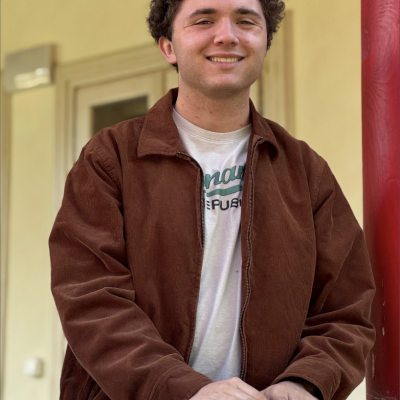
Syracuse University | Anthropology & History | Blake Wilson is a sophomore at Syracuse University studying Anthropology and History. He has participated in archaeological excavation and conservation in New York while pursuing his love for the past. He hopes to continue this work in archaeology focusing on the ancient world, notably early civilizations and cultures such as those of Europe with the ultimate goal of achieving a PhD in this work and teaching a new generation of archaeologists about our past and our place in the present. |
Ritual & Remains | My research is focused on the period of early human history known as the Bronze Age, roughly 3,000 to 5,000 years ago, with a focus on religion during this time. When people think of this era we often think of places like Egypt or Greece and neglect places outside the Mediterranean. Specifically in Europe, my project was based in Wroclaw, Poland and I hope to bring a more complete view of our early history to people and promote further research into ancient Central Europe. To do this I studied artifacts such as ceramics, tools, and burials in the Archaeological Museum of Wroclaw and worked with a professor from the Archaeological Department at the University of Wroclaw. Notably I learned that Central European bronze age cultures such as the Lusitanians would ritually destroy a weapon usually by burying it, a tradition mirrored almost a thousand years later by the Celtic Peoples. The study of the past gives us a new understanding of the present by looking at historical patterns and studying the ancient past gives us a new understanding of ourselves by looking at human habits such as religion and burial. |
Blake Wilson - Tyler Summit.pptx13.83 MB
|
Archaeology, Ancient History, Bronze Age, Burials, Religion | Yes | |
| 5 | Star/flag Virtual Summit 2025: Submission #5 | Lock Virtual Summit 2025: Submission #5 | Add notes to Virtual Summit 2025: Submission #5 | Mon, 11/03/2025 - 04:42 PM | Anonymous | 134.193.204.95 | Emmanuel Fabian |
|
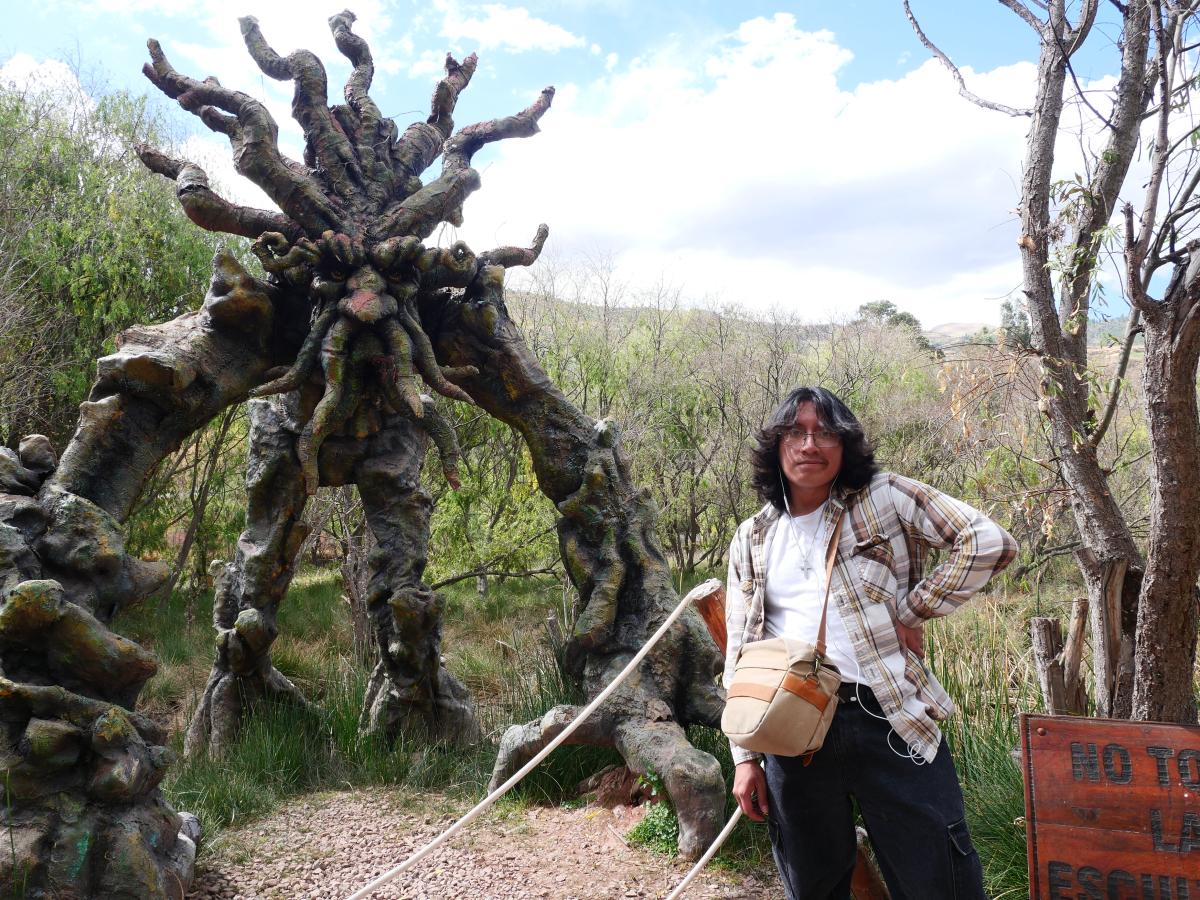
University of Missouri-Kansas City | Spanish & Film and Media Arts | Emmanuel Fabian is a Mexican photographer majoring in Spanish & Film and Media Arts at UMKC. He currently works in the UMKC Biology department as a Video Production Editor and previously worked television for Telemundo Kansas City along with Univision Kansas City. This past March he presented his research at the Undergraduate Research Day at The Capital in Jefferson City, MO. His focus in research and filmmaking is within syncretism, myths and Folk Catholicism and in 2024 he worked on a research project in Peru where he documented myths, legends and even paranormal experiences native to the Andes region. | The Bridge Between Two Nationes: The Nikkei Community of Peru | This research seeks to discuss the contributions that the overlooked Nikkei community have provided to Peruvian society. Among the contributions, came Nikkei-Peruvian filmmaker, Eulogio Nishiyama who helped revolutionize Peruvian cinema and photography by leaving a lasting legacy of work that revolved around Peruvian and indigenous culture. His work having left an image of Peru to the outside world and being internationally recognized has created a lasting influential legacy to Peruvian cinema and photography. Among the contributions, came hardships, and a tense history between the Japanese community and the Peruvian government. In addition to this came various challenges for those who dared to take the risk, charged full of hope, of leaving their country of origin in exchange for a future in faraway horizons. | Japan // Peru // Japanese-Peruvian // Nikkei // Immigrants | Yes | ||
| 3 | Star/flag Virtual Summit 2025: Submission #3 | Lock Virtual Summit 2025: Submission #3 | Add notes to Virtual Summit 2025: Submission #3 | Wed, 10/15/2025 - 12:16 PM | cfw17 | 144.174.212.99 | Charlotte Stuart-Tilley |
|
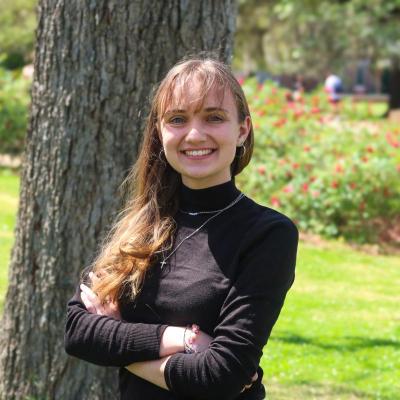
Florida State University | International Affairs and French | Charlotte Stuart-Tilley is a third-year senior pursuing a dual degree in International Affairs and French at FSU, with a minor in Religion. Her research interests include post-colonial identity, migration, and African studies. She has participated in the Undergraduate Research Opportunity Program, served as a Sustainable Campus Fellow, received an IDEA Grant as a Tyler Fellow, and is currently completing an Honors in the Major thesis. Since middle school, she has been an advocate for human rights and the environment. Following her graduation in Spring 2026, Charlotte hopes to continue her advocacy work in sustainable development or in a human rights-related field. | Marginal People, Minimal Rights – Indigenous Fulbe Approaches to Human Rights & Sociopolitical Stigma in the Accra Metropolitan District of Ghana, West Africa | The Fulbe (also known as Fula or Fulani) are a historically nomadic ethnic group spread across West Africa. In Ghana, Fulbe communities often face discrimination and state-sanctioned violence. Both nomadic and sedentary Fulbe observe an unwritten code of conduct known as pulaaku, meaning “responsibility” in Fulfulde. Drawing on interviews conducted in Fulfulde with Fulbe participants, this study presents a lexicon of terms used to describe their experiences of marginalization in the Greater Accra region. Concepts such as pulaaku, seemtende (translated as “shame” or “shyness”), and “peaceful coexistence” frequently emerged in participants’ accounts. Through these notions and lived experiences, this study examines how Fulbe conceptualize their oppression in relation to pulaaku and other elements of Fulbe identity. By recognizing alternative understandings of human dignity and value, this research seeks to inform global efforts to make human rights frameworks more inclusive and relevant to marginalized populations in the Global South, who disproportionately suffer from violence, exclusion, and systemic injustice. | StuartTilley_poster.pdf4.94 MB
|
Human rights Ghana Accra International Affairs |
Yes |